
READI 2.0
Here’s What Communities, Builders, and Residents Should Know
Big changes are coming to housing and redevelopment across West Central Indiana—and now is the time to get READI.
Thrive West Central recently hosted an online briefing led by CEO Ryan Keller to share an early look at new housing and redevelopment funding expected to roll out over the next few years. While final contracts are still being finalized with the state, Thrive is preparing to move fast once funding opens.
The goal of the briefing was simple: help communities start planning now so they can take advantage of these opportunities as soon as they’re available.
Here are the biggest takeaways.
DISCLAIMER
Awards are pending. The information in this presentation is provided in anticipation of final awards and is not guaranteed. There are many moving parts, and all information presented is subject to change.
Two Major Funding Opportunities Are Ahead
Thrive West Central expects to manage two major funding programs focused on housing, infrastructure, and reuse of older properties.
READI 2.0: Housing & Infrastructure
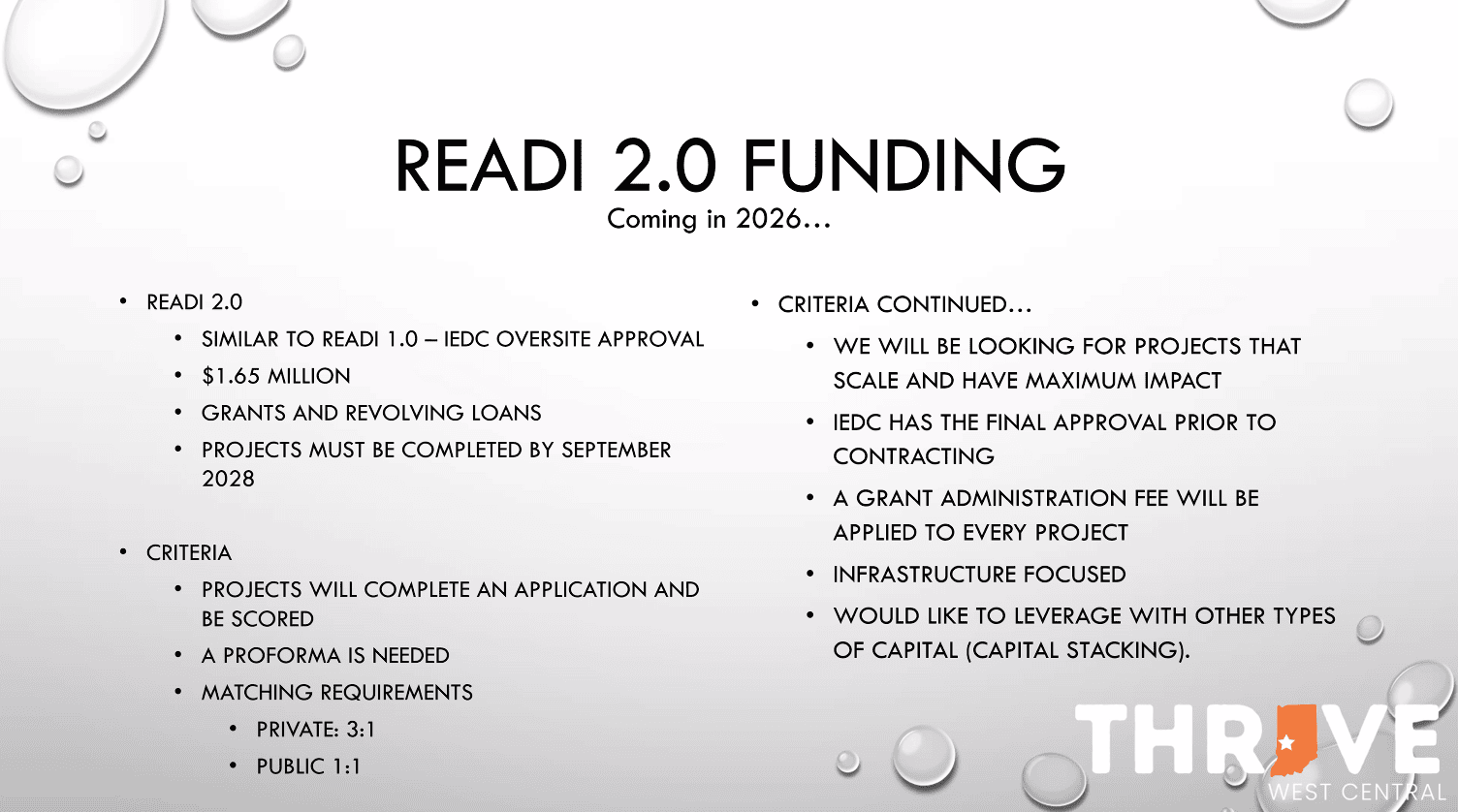
Thrive is anticipating about $1.65 million through the READI 2.0 program. This funding will help communities build or improve the infrastructure needed for housing, such as:
- Water and sewer lines
- Roads and stormwater systems
- Other site improvements that make housing possible
Funds may be offered as grants or low‑interest loans, depending on the project. Projects will be reviewed based on local needs—what makes sense in a small town may look different than in a larger city.
Projects that use land efficiently, match local housing needs, and build at a meaningful scale will be strongest.
Lilly Blight & Rehabilitation Funding
Thrive is also preparing to manage up to $8 million in funding focused on fixing up or reusing problem properties:
- $5 million expected upfront
- Up to $3 million for future “catalyst” projects
This funding is mainly structured as loans that get repaid and reused, helping support housing projects long into the future.
To qualify, a project must involve:
- A blighted property
- A brownfield
- Or a building with major deferred maintenance
This creates opportunities to turn vacant or rundown buildings into new housing or mixed‑use spaces. Empty lots with no remaining blight would not qualify under this program but may still be eligible for READI funding.
All projects must be finished by September 2028, so planning early is important.
Local Match Is Required—but It’s Flexible
Both funding programs require local participation, but that doesn’t always mean writing a big check.
Local match can often come from:
- Planned road or utility projects
- Water or sewer upgrades near the site
- Stormwater improvements tied to the development
The goal is to stretch local dollars by using work communities are already planning to do.
READI Projects Will Move Faster
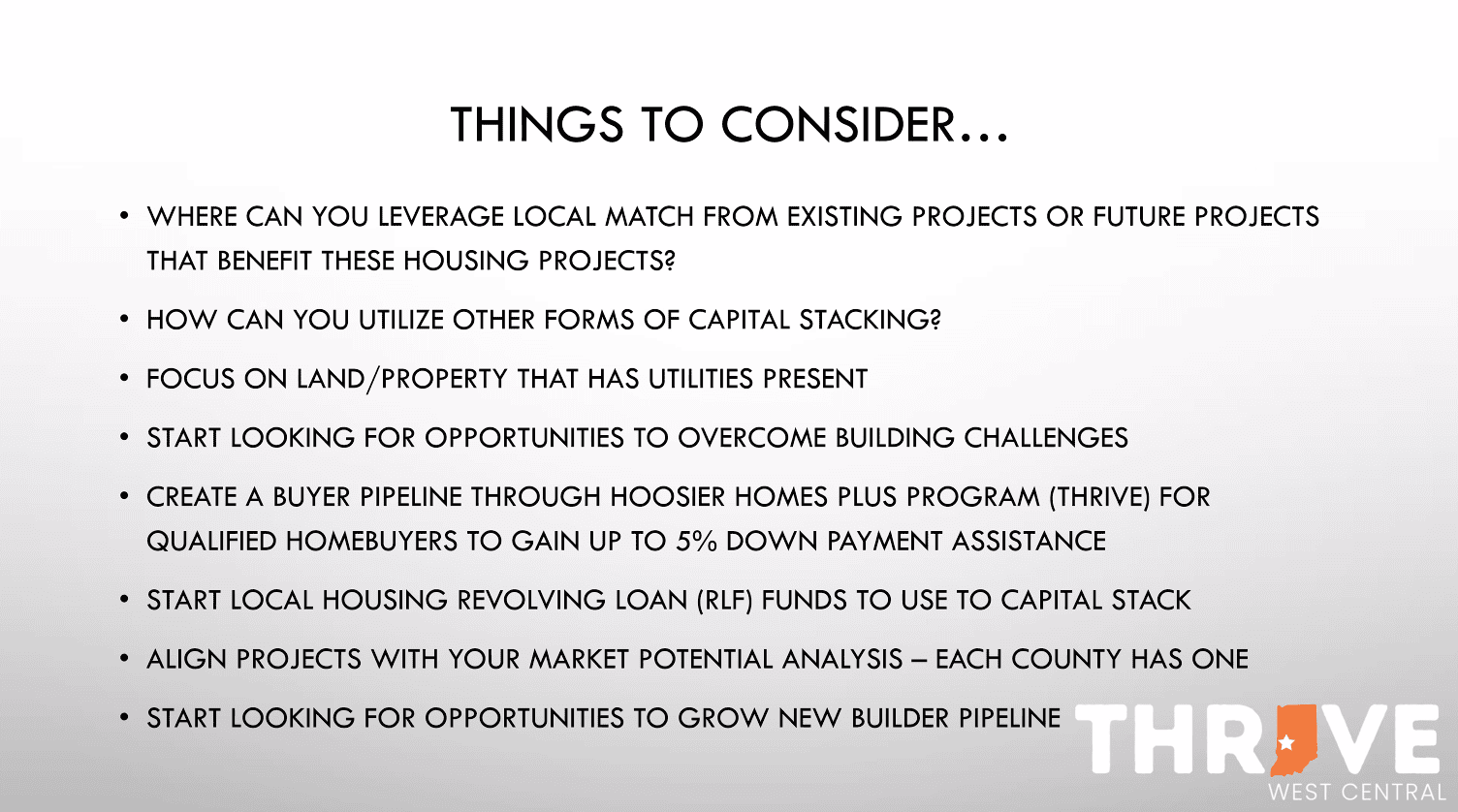
One clear message from the briefing: projects that are READI will win.
Projects are more likely to succeed if they:
- Are on sites with existing utilities
- Don’t require major new infrastructure extensions
- Are large enough to make a real impact
Very small projects—like one or two homes—are usually not practical because of paperwork and reporting requirements. Instead, Thrive will focus on clustered or multi‑unit projects that can move efficiently.
Helping Buyers Afford New Homes
Building homes is only part of the solution—people also need help buying them.
Ryan highlighted Hoosier Homes Plus, a down‑payment assistance program Thrive helps manage through Club 720. The program can provide:
- Up to 5% down payment assistance
- No cost to buyers or realtors
- A 0% interest loan that is forgiven if the home buyer stays in the home for 7 years

If a homeowner stays in the house for 7 years, the DPA is fully forgiven. If they move early, only the remaining balance must be repaid. The program is available to households earning up to 140% of the area’s median income, helping many working families qualify.
Local governments, employers, banks, or community partners can help provide matching funds to expand this program even further.
What Happens Next
Thrive will soon launch a formal application process and will work directly with communities, builders, and developers to shape strong projects before they apply.
To spread the word, Thrive is hosting a Builders & Developers Meeting:
📅 March 26
🕙 10:00–11:00 AM
📍 Vigo County Historical Center (3rd‑floor auditorium)
💻 In‑person and virtual options available Click to Join via Zoom
Meeting ID: 895 8156 7981
Passcode: Thrive

The Big Picture
These funding opportunities are a major chance to:
- Build more housing
- Reuse empty or rundown buildings
- Invest in infrastructure
- Create long‑term housing solutions
Communities that start planning now will be best positioned to benefit.
